
Top 10 Foods That Can Damage Your Teeth & What to Eat Instead
- NuBella Team

- 6 days ago
- 7 min read
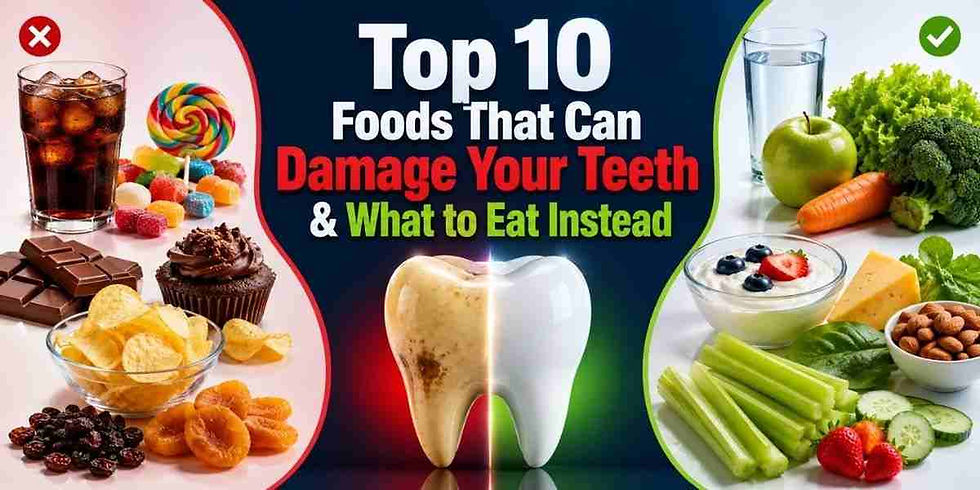
Most of us think about brushing when we think about protecting our teeth. Food deserves a place in that conversation too. If you are looking for a Dental Clinic in South Delhi, you may already know that regular dental care matters, but what you eat, and how often you eat it, can also affect your teeth and gums.
Some foods encourage the bacteria in plaque to produce acids. Others are acidic themselves and can gradually wear away tooth enamel. Sticky foods can cause another problem by staying on the teeth longer. None of this means you need to give up every sweet or sour food you enjoy. It simply means that some choices are better as occasional treats than everyday habits.
So, let’s look at the foods that damage your teeth, why they can cause problems, and the easier swaps that can make your everyday diet a little kinder to your smile.
How Food Actually Affects Your Teeth
There is a simple process behind much of this.
Your mouth contains bacteria, and some of those bacteria use sugars and starches from food to produce acids. Those acids can remove minerals from tooth enamel. Saliva and fluoride help the teeth recover minerals, but repeated acid attacks can eventually lead to tooth decay and cavities.
Acidic foods and drinks create a slightly different problem. Dietary acids can directly contribute to enamel erosion without bacteria being responsible for the acid. Frequency matters here. Having an acidic drink once is not the same as sipping it repeatedly throughout the day.
That is why the foods bad for teeth are not limited to obvious sweets. Your eating pattern matters too.
10 Foods and Drinks That Can Damage Your Teeth
1. Sticky Candy and Gummies
Gummy sweets, chewy candy and similar treats have an obvious downside: they stick around.
The longer sugary food remains on or between the teeth, the more opportunity plaque bacteria have to use those sugars. Sticky sweets can therefore become some of the more troublesome snacks that damage teeth, particularly when you eat them frequently.
You do not have to ban them forever. Keep them as an occasional treat instead of something you reach for several times a day.
Try instead: cheese, nuts or crunchy vegetables when you want something to snack on.
2. Soft Drinks and Sugary Beverages
Sugary drinks are one of the easiest ways to expose your teeth to sugar without really noticing how often it happens.
Soda, sweetened tea, energy drinks and many sports drinks can contain sugars that oral bacteria turn into acids. Many of these beverages are acidic as well, so they can create concerns around both tooth decay and enamel erosion.
There is another habit worth watching: sipping.
Finishing a drink with a meal is different from carrying it around and taking small sips for hours. Frequent exposure gives your teeth more repeated contact with sugar and acid.
Try instead: plain water, particularly fluoridated water where available.
3. Sour Candy
Sour candy earns its name from acid, and that sharp taste can come with a dental downside.
These sweets often combine sugar with acids. The sugar can support acid production by plaque bacteria, while the added dietary acids can contribute directly to enamel erosion. That combination makes sour sweets a reasonable candidate for the list of foods harmful to teeth when eaten regularly.
If you enjoy sour candy, keep the portion small and avoid eating it repeatedly over an extended period.
4. Dried Fruit
Dried fruit can certainly have a place in a balanced diet. The issue is its texture.
Raisins and other dried fruits can be sticky and may remain attached to tooth surfaces. The ADA's oral-health guidance notes that sticky dried fruits can contribute to prolonged exposure to acids produced by cavity-causing bacteria.
Fresh fruit is often a simpler choice when you want something naturally sweet.
Try instead: an apple, pear or another whole fruit, followed by water.
5. Potato Chips and Other Starchy Snacks
Chips do not taste like candy, so they are easy to overlook when discussing foods that cause cavities.
But starches can contribute to the tooth-decay process too. Food particles may also become trapped between teeth, giving plaque bacteria more material to work with. NIDCR includes foods such as bread, cookies and other starch-containing foods in the wider tooth-decay process.
That does not make every starchy food unhealthy. It simply means that frequent snacking and poor cleaning between teeth can create problems.
Try instead: nuts, seeds, cucumber or carrot sticks.
6. Citrus Fruits
Here is where dental advice needs a little nuance.
Oranges, lemons and grapefruit can be nutritious foods. They are not foods you need to fear. However, citrus fruits contain acids that can contribute to enamel erosion, especially when exposure is frequent.
The better approach is to enjoy them as part of a meal rather than constantly nibbling on acidic foods throughout the day.
Afterward, rinse your mouth with water rather than brushing immediately.
7. Fruit Juice
Fruit juice often sounds healthier than soda, but your teeth do not judge drinks by their marketing.
Juice can contain naturally occurring sugars, and many fruit juices are acidic. Regular exposure can therefore contribute to the conditions associated with tooth decay and dental erosion.
Whole fruit is generally a better everyday choice because it provides the food in its original form rather than as a concentrated drink.
Try instead: whole fruit and water.
8. Sports and Energy Drinks
Sports and energy drinks deserve attention because people sometimes assume that anything associated with exercise must be good for their teeth.
Many of these drinks contain sugar, and acidic formulations can also contribute to enamel erosion. The ADA identifies frequent consumption of soft drinks and other acidic beverages as an important risk factor for erosive tooth wear.
If you are not exercising intensely or otherwise have a specific reason to use a sports drink, water is usually the simpler option.
9. Cakes, Biscuits and Sweet Pastries
Cookies, cakes, pastries and similar desserts contain varying amounts of sugar and refined carbohydrates. When sugars reach plaque bacteria, those bacteria can produce acids that attack enamel and contribute to tooth decay.
The problem is not that one biscuit will suddenly give you a cavity. Dental health does not work that dramatically.
Frequency is the bigger picture.
Eating a dessert with a meal is generally preferable to grazing on sweet foods throughout the afternoon.
10. Very Hard Foods
Not all foods that damage teeth do so because of sugar or acid.
Very hard foods can put physical stress on teeth. This matters particularly if a tooth already has a crack, large filling or other weakness. Biting down aggressively on something extremely hard is not a great way to test your teeth's strength.
And please do not use your teeth to open packets or bottles. Your teeth are impressive, but they were not designed to be household tools.
Try instead: cut hard foods into manageable pieces and chew them normally.
What Should You Eat for Healthier Teeth?
Once you know which foods can create problems, the next question is much more useful: what should you eat instead?
A balanced diet can support both oral and overall health. The ADA recommends nutritious foods such as fruits and vegetables, protein sources, whole grains and dairy products without added sugars as part of a healthy eating pattern.
Some practical tooth-friendly foods include:
Fresh fruits and vegetables
Cheese and unsweetened dairy products
Eggs
Beans and lentils
Nuts and seeds
Whole grains
Water
Foods containing calcium and phosphate can contribute to the mineral environment that supports teeth, while saliva naturally helps buffer acids and return minerals to enamel. Fluoride also plays an important role in protecting teeth against decay.
In other words, there is no single “superfood” that protects your smile. Good dental health comes from a pattern of sensible food choices and consistent dental care.
It Is Not Just What You Eat—It Is How Often
This part is easy to overlook.
Imagine someone eats a small dessert once with lunch and another person spends the entire afternoon sipping a sugary drink. The amount of sugar may not tell the whole story. Repeated exposure gives plaque bacteria repeated opportunities to produce acids.
That is why cutting down on constant snacking can be helpful for your teeth.
If you do snack, choose foods that are less sugary and less acidic. Cheese, vegetables, nuts and other nutritious options can fit more comfortably into a tooth-friendly eating routine.
Simple Habits That Help Protect Tooth Enamel
You do not need a complicated routine.
Drink water after meals. Rinse your mouth with water after acidic foods or drinks. Avoid holding or swishing acidic beverages around your teeth. And after significant acid exposure, give your enamel time before brushing rather than immediately scrubbing softened enamel. The ADA recommends rinsing with water and avoiding immediate brushing after acidic exposure.
Sugar-free gum can also increase saliva flow, which helps your mouth manage acids.
Evidence around specific sweeteners such as xylitol is more limited, so it is better to view sugar-free gum as an optional supportive habit rather than a replacement for brushing or professional dental care.
Most importantly, brush twice a day with fluoride toothpaste, clean between your teeth and attend regular dental checkups.
When Food Is Not the Whole Problem
Sometimes tooth sensitivity, discoloration, bad breath or discomfort gets blamed on diet when something else is going on.
Enamel erosion can have dietary causes, but dental professionals also consider factors such as acid reflux, vomiting, dry mouth and other individual circumstances.
If you are already experiencing sensitivity or notice changes in your teeth, changing your diet alone may not solve the problem. A professional examination is a much better starting point.
For women looking for a Dental Clinic in Green Park, NuBella Centre for Women’s Health provides dental services in collaboration with Nu Dental Maestro. Its listed dental services include routine checkups, cleanings, cosmetic dentistry, orthodontics, dental implants and root canal treatment. NuBella is based in Green Park Extension and takes a broader women's health and wellness approach.
Final Takeaway: Protect Your Teeth With Smarter Food Choices
The most important lessons we can learn from 'tooth-destroying' foods are straightforward: it's all about the number of doses. Chocolate, sticky snacks, soft drinks, acidic drinks, and refined starchy snacks are all known to cause a dental risk of tooth decay and enamel erosion. Yet you do not need to base your diet around fear.
Instead, have balanced meals, drink water, eat tooth-friendly foods, practice good oral hygiene, use fluoride toothpaste, and get your regular dental examination. Protect your teeth with the body's own defence system, saliva and remineralization.
Help it out by avoiding excess sugar and acids that attack the mouth, and your teeth will stand a better chance of staying healthy. Do you require professional dental advice?
Get in touch with NuBella Centre for Women's Health. We are dedicated to ensuring you get professional help with your dental health and place a medical focus on your health and your ambitions.


Comments